





If you’ve been following movie theater news lately, you probably caught Alamo Drafthouse’s recent announcement about their mobile app—and if you’re a brand strategist like me, you’re probably just as concerned as I am about what this means for their customer experience branding.
Let me be real with you: what’s happening with Alamo Drafthouse right now? It’s a masterclass in how to accidentally destroy everything that makes your brand irreplaceable.
What Makes Alamo Drafthouse Different? Understanding Their Brand Positioning
For those unfamiliar with Alamo Drafthouse, this Austin-born movie theater chain built its entire brand identity on creating an immersive customer experience that no other theater could touch. Their brand differentiation strategy was brilliant in its simplicity: be the anti-phone, anti-distraction sanctuary for people who actually love movies.
When I lived in Austin and experienced my first Alamo screening, their customer experience design blew me away. Here’s what set them apart:
The No-Phone, No-Talking Policy – This wasn’t just a suggestion. This was their brand positioning statement brought to life. Get caught with your phone? Warning. Do it again? You’re out. Period.
The Signature Pen-and-Paper Ordering System – This is where their competitive advantage in business became crystal clear. Instead of forcing you to use a mobile app or stumble to the lobby, Alamo created something genius: small tables at each seat, paper menus, and ordering slips. You write what you want, place it at your table’s edge, and servers quietly retrieve it and bring your food without you missing a single frame.
This wasn’t just about convenience—it was intentional brand experience design that reinforced everything Alamo stood for: complete immersion, zero distractions, movie magic.
Alamo Drafthouse Mobile App: The Announcement That Sparked Backlash
Here’s where protecting brand identity goes completely off the rails: Alamo Drafthouse just announced they’re ditching their beloved pen-and-paper ordering system for—you guessed it—a mobile ordering app.
Yes, the theater that built its reputation on being aggressively anti-phone now wants you to pull out your phone during the movie.
The customer feedback has been brutal. Across social media, loyal customers are threatening to cancel season passes. Friends of mine with Alamo memberships are already drafting emails saying they’ll walk if this goes through. This isn’t just noise—it’s a crystal-clear signal about what happens when you ignore customer experience in branding.
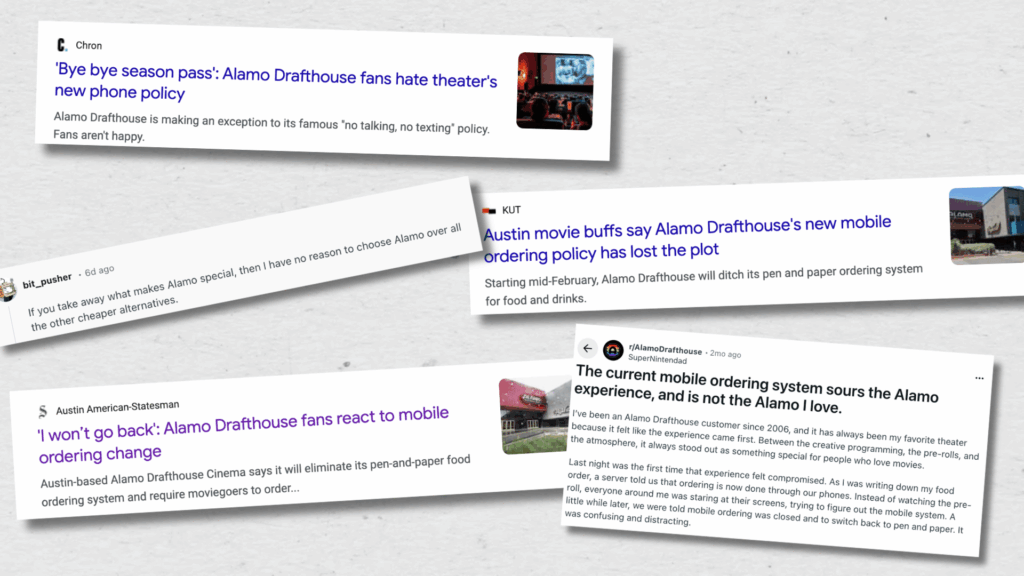
Alamo’s reasoning? They claim the mobile app will make ordering “less disruptive” and “faster.” But here’s what every brand strategist sees: this looks like a cost-cutting move dressed up as customer experience improvement. And customers? They’re not buying it.
The Brand Strategy Mistake: Giving Away Your Competitive Advantage
From a brand differentiation strategy perspective, this decision is even more dangerous than the immediate backlash suggests. Alamo is voluntarily surrendering their biggest competitive advantage in business—the one thing competitors literally couldn’t replicate.
Think about the current movie theater landscape: Almost every chain now offers seat-side delivery. Premium menus? Standard. Comfortable recliners? Everywhere. These aren’t differentiators anymore.
But that complete technology removal to create a truly immersive customer experience? That was Alamo’s alone. That was their moat. That was what made their customer experience branding untouchable.
By switching to a mobile app, they’re erasing the very thing that justified their premium positioning and kept customers fiercely loyal. This is what brand positioning mistakes look like in real-time.
How to Protect Your Brand: Three Customer Experience Branding Lessons
1. Stay Connected to What Your Customers Actually Value (Customer Loyalty Branding 101)
The executives making this Alamo Drafthouse mobile app decision are clearly disconnected from actual customer needs. They’re looking at spreadsheets instead of listening to the people who made them successful.
Your brand strategy lesson: Before you change anything about your customer experience, actually talk to your customers. Read reviews. Send surveys. Pay attention to what people say they love about you. Customer experience design isn’t about what you think is efficient—it’s about what your customers find valuable.
Don’t assume you know better than the people choosing your brand over competitors every single day.
2. Your Customer Experience IS Your Brand Differentiation Strategy
Too many business owners think brand identity lives in logos and color palettes. But here’s the truth about protecting brand identity: your customer experience is often your most powerful differentiator.
In today’s commoditized market, creating memorable customer experiences is what separates brands people tolerate from brands people love. We’re past the era where a decent product guarantees customer loyalty branding. People want to feel something. They want experiences worth talking about, worth returning for, worth defending.
Your brand strategy lesson: Map out the experiential elements that make your brand special, then guard them like your business depends on it—because it does.
Take Costco’s $1.50 hot dog combo. They lose money on it. But they understand it’s integral to their brand experience, and no profit margin is worth sacrificing that customer connection. That’s how to protect your brand’s soul.
3. Business Branding Tips: Know When to Reverse Course
I don’t know if Alamo will walk back this decision, but I hope they do. Here’s what every founder needs to understand: reversing a bad decision isn’t weakness—it’s strategic leadership.
When you announce changes and receive overwhelming negative customer feedback, don’t dig in out of ego. Listen. Acknowledge. Adjust. Your customers will respect responsiveness far more than stubborn consistency.
Your brand strategy lesson: Stay flexible enough to course-correct while staying firm on your core values. The brands that last know the difference between protecting what matters and defending what doesn’t.
Brand Differentiation Strategy: What Happens When You Lose Yours
Alamo plans to roll out this mobile ordering system in February 2025. The customer backlash suggests they’re making a critical error in competitive advantage thinking: optimizing for operational efficiency at the expense of brand positioning.
The movie theater industry is already struggling. Voluntarily abandoning your competitive advantage in business seems like exactly the wrong move at exactly the wrong time.
For those of us watching this unfold, it’s a case study in brand positioning mistakes. Every business faces pressure to cut costs and modernize. But not every operational change is worth the trade-off.
Ask yourself: Am I optimizing operations at the expense of customer experience branding? Am I making changes that erode my competitive advantage?
If you’re streamlining processes because they seem old-fashioned or inefficient, without considering how those processes contribute to customer loyalty branding, you might be making Alamo’s exact mistake. And you might not realize it until customers start leaving.
Protecting Your Brand Experience: Is Yours Strong Enough?
If this story has you thinking about your own customer experience design—what makes it special, what your customers actually value, and whether you’re protecting those elements or letting them slip away—that’s exactly the right question to be asking.
At Verdure Design Co., I work with founders who understand that creating memorable customer experiences isn’t just about aesthetics—it’s about building such a compelling brand differentiation strategy that customers choose you repeatedly, even when cheaper or more convenient options exist.
Strong customer experience branding means people don’t just buy from you—they defend you. They advocate for you. They threaten to cancel memberships when you mess with what makes you special.
That’s the kind of brand positioning every business should aspire to. And it’s exactly what Alamo Drafthouse risks losing.
How to Protect Your Brand’s Competitive Advantage
Here’s what I want you to do right now:
Step 1: Identify your brand’s “pen and paper ordering system” – What’s the thing customers love that seems inefficient or old-school but actually drives your competitive advantage in business?
Step 2: Protect it fiercely – Not every operational improvement is actually an improvement. Some “inefficiencies” are features, not bugs.
Step 3: Test before you wreck – Before making major changes to customer experience, pilot them. Gather customer feedback. Actually listen to what people tell you they want.
Step 4: Remember why they chose you – Your brand differentiation strategy only works if you maintain what made you different in the first place.
If you’re ready to build a brand with customer experience branding so strong that your customers would riot if you changed it—that’s exactly the kind of magnetic brand we should create together.
Because the last thing I want is to watch another founder accidentally destroy the competitive advantage they worked so hard to build.
Let’s make sure your brand experience is worth protecting—and that you never lose sight of why customers chose you in the first place.
What’s your take on Alamo Drafthouse’s mobile app decision? Have you seen brands make similar mistakes with their customer experience? Drop your thoughts below—and if you haven’t experienced that magical pen-and-paper ordering, you might want to visit Alamo before February while you still can.


comments +